Words are an interface. Design them properly.
We are a content design studio. We work out what a person is actually trying to do, then design the language, structure and sequence that lets them do it — for councils, health services, regulators and any organisation whose writing has consequences.
- Founded
- 2016, Sheffield
- Studio
- Fourteen people
- Sectors
- Public, health, regulated
- Standards
- GOV.UK Service Standard
- Access
- WCAG 2.2 AA as a minimum
- Testing
- Every project, no exceptions
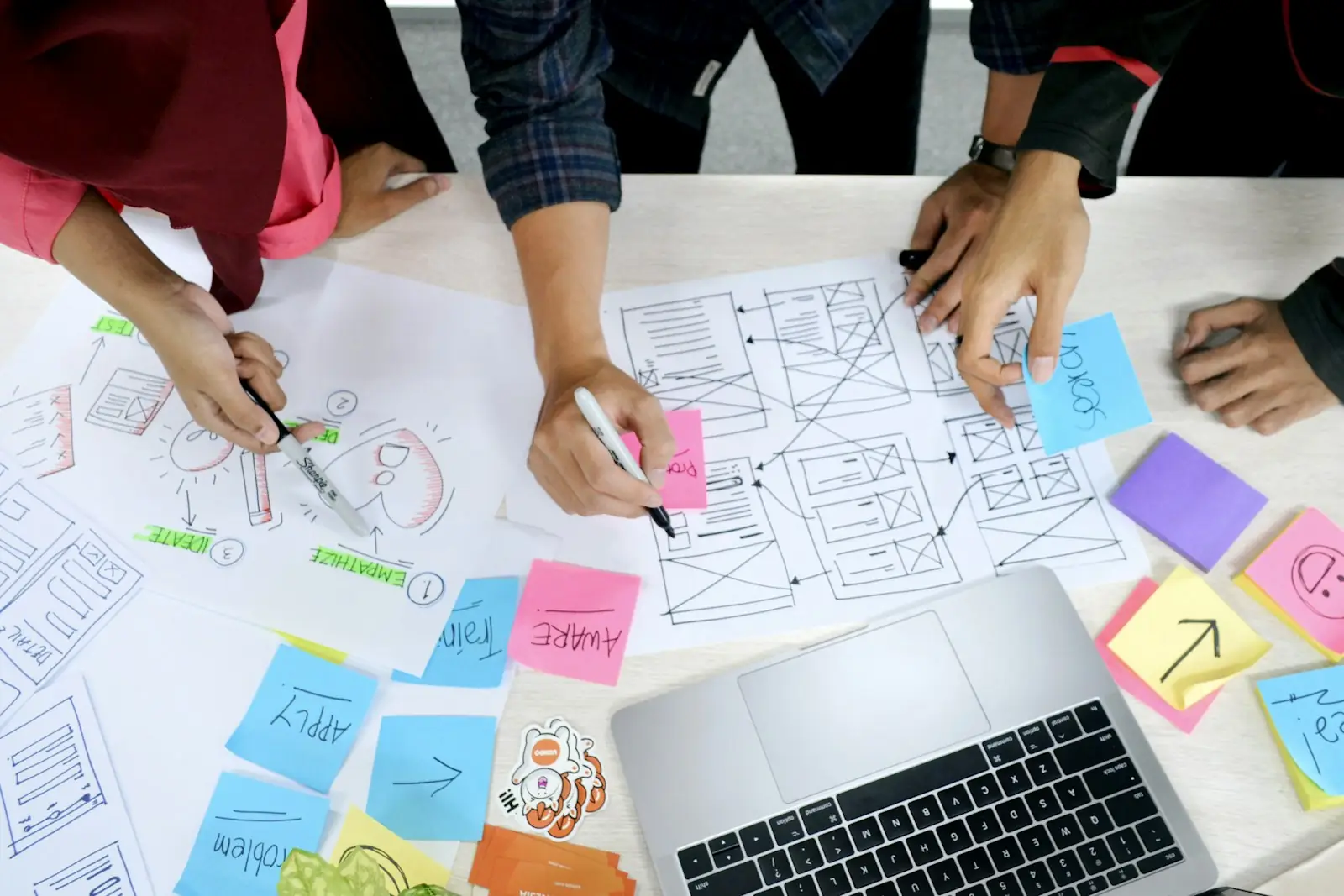
Content design is not copywriting.
Copywriting persuades. Content design removes obstacles. They are different jobs and confusing them is why so many public services read beautifully and still cannot be completed.
A content designer starts from a user need — "I need to know whether I can appeal this decision" — and the evidence about who has that need and in what state they arrive. Only then do they decide whether the answer is a page, a form field, a letter, a change in policy, or the removal of three pages that were confusing everyone.
Frequently the best content design outcome is less content. We have deleted 8,000 pages from one client's site and watched their contact centre volume fall, because most of those pages existed to explain the pages around them.
This matters most where the writing has consequences. A badly structured benefits page, an ambiguous consent form or a confusing appeals letter does not just annoy people — it changes what happens to them. That is the work we take on.
Six things we do.
Content audit & strategy
A full inventory of what exists, what it is for, what it costs to maintain and what should be deleted. Delivered as a working spreadsheet your team can act on, not a PDF.
- Full content inventory
- Performance & decay analysis
- Duplication mapping
- Deletion recommendations
Information architecture
How the whole thing is organised, named and navigated — tested with card sorting and tree testing rather than agreed in a workshop by the people who already know where everything is.
- Card sorting & tree testing
- Taxonomy & labelling
- Navigation design
- URL & redirect strategy
Plain English content
Rewriting so that a reader under stress, on a phone, with limited time can act correctly the first time. Measured against reading age targets, not tone preferences.
- Reading age targets
- Letters & notices
- Forms & error messages
- Legal-to-plain translation
Design systems
Component libraries with content rules attached, so the next hundred pages are consistent without anyone having to police them.
- Component libraries
- Content patterns
- Editorial governance
- Team training
Usability testing
Moderated testing with people who represent the hardest cases, not the easiest. Recorded, analysed and reported with the failures shown first.
- Moderated sessions
- Assistive technology testing
- Recruitment for edge cases
- Findings within 5 days
Accessibility
WCAG 2.2 AA as a floor rather than a target, audited manually as well as automatically, with a remediation plan ordered by user impact.
- Manual WCAG 2.2 audit
- Screen reader testing
- Accessibility statements
- Prioritised remediation
Four phases. Evidence at each one.
Discover
User needs, analytics, contact centre data and front-line staff interviews. We spend a day listening to calls on almost every project; it is consistently the most useful day.
Define
User needs written as testable statements, a content model, and an information architecture validated by tree testing before anyone writes a word.
Design
Content designed in the pattern library, in context, at real length. Reviewed by policy and legal in a structured pass rather than by email over three weeks.
Test & iterate
Moderated testing with real users, including assistive technology. We report failures first, fix them and test again before the work is signed off.
Three projects, with the numbers.
Deleting 8,000 pages
A metropolitan council site had grown to 11,400 pages across nineteen years and four content management systems. We audited every one, mapped duplication and deleted seventy per cent of it.
- Pages removed
- 8,010
- Contact centre calls
- −34%
- Task completion
- +29%
The letter people understood
An NHS trust's appointment letter caused 900 unnecessary calls a month. We rewrote it, tested it with patients over 70 and with people whose first language was not English, then tested it again.
- Calls about the letter
- −71%
- Did-not-attend rate
- −12%
- Reading age
- 16 → 9
Guidance people could follow
Two hundred pages of regulatory guidance that businesses consistently misinterpreted. We restructured it around what a business is trying to do rather than around the legislation's own order.
- Compliance queries
- −48%
- First-time correct filings
- +22%
- Pages
- 200 → 74


"Most of those 8,000 pages existed only to explain the pages around them."
Content audit, metropolitan council, 2025Fixed fees. Published.
Excluding VAT. We do not bill by the hour and we do not charge for change requests that fall inside an agreed scope.
Content audit
£7,400 fixed
- Four weeks, two designers
- Full content inventory
- Duplication & decay analysis
- Deletion recommendations
- Working spreadsheet handover
- Presented to your team
Design sprint
£16,800 fixed
- Six weeks, four-person team
- Discovery with real users
- Information architecture, tested
- Content designed in context
- Two rounds of usability testing
- Accessibility audit included
- Pattern documentation
Embedded team
£24,500 per month
- Minimum three months
- Four to six people in your team
- Works to your ceremonies
- Design system ownership
- Continuous user research
- Training and capability transfer
- Named delivery lead
Asked in procurement.
What is content design, exactly?
Do you work to the GOV.UK Service Standard?
Who do you test with?
Will you tell us to delete things?
Can you work inside our team?
Do you handle Welsh or other language versions?
What insurance and certification do you hold?
Tell us the task people cannot complete.
Not the page you want rewritten — the thing a person is trying to do and failing. That is where any useful conversation starts.
- [email protected]
- Phone
- +44 114 496 0273
- Studio
- Kollider, Castle House, Angel Street,
Sheffield S3 8LN, United Kingdom - Hours
- Monday to Friday, 09:00–17:00 GMT